Deforestation falls 41% in one year and 71% compared to the end of Bolsonaro's government. These numbers can be considered a historic achievement.






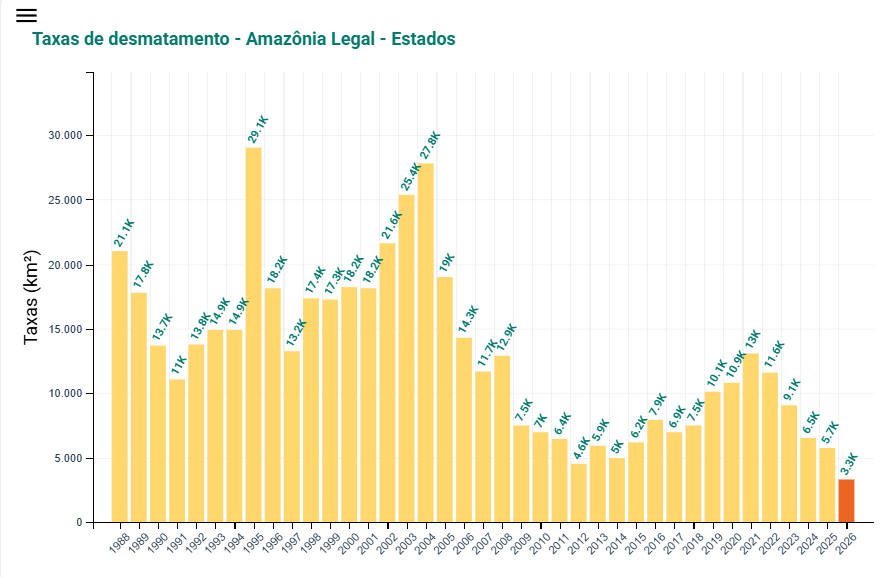
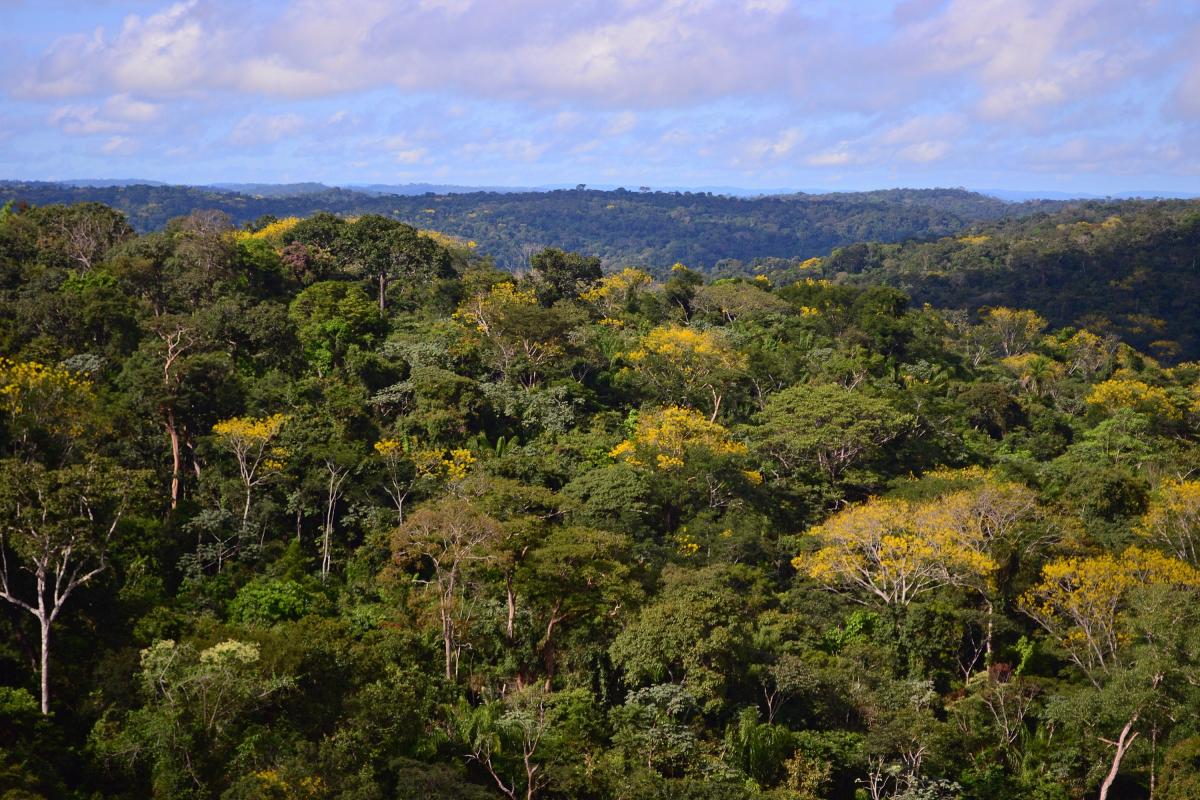
Brazil has achieved a historic milestone! The Amazon and Cerrado biomes simultaneously recorded their lowest annual deforestation rates since the start of their respective historical series from the National Institute for Space Research (INPE).
In the Legal Amazon, 3,3 km² were deforested from August 2025 to July 2026, compared to 5,7 km² in the previous period, a decrease of approximately 41%.
The approximately 2,3 km² of forests saved in one year is equivalent to one and a half times the size of the city of São Paulo.
This year's reduction also represents a 27% decrease compared to the previous record of 4,5 km² in 2012. The series began in 1988 ( see graph ).
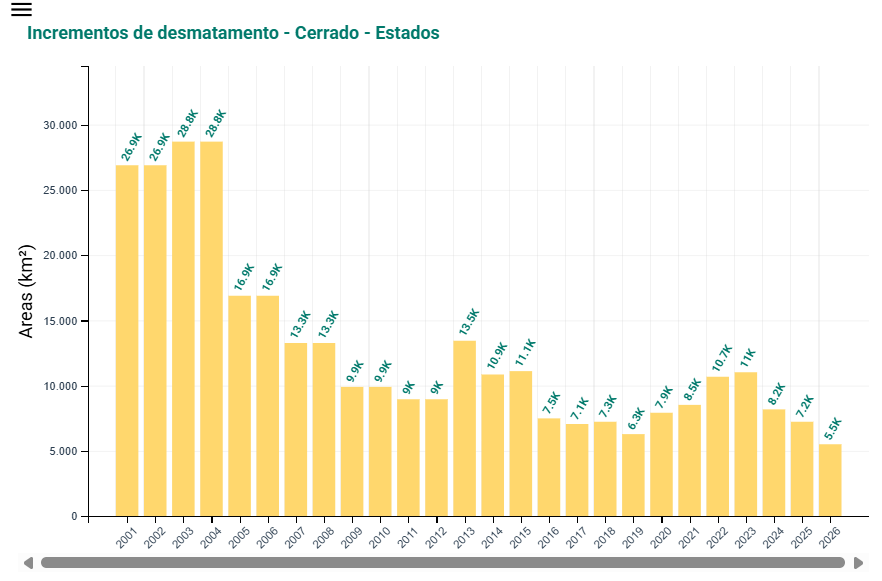
In the Cerrado biome, the deforested area totaled 5,5 km² in the same period from August 2025 to July 2026, compared to 7,2 km² in the previous 12 months. This represents a decrease of more than 23%. Until then, the lowest value had been recorded in 2019, with 6,3 km². The new figure is approximately 13% lower than the latter. In this case, records began in 2001 ( see graph ).
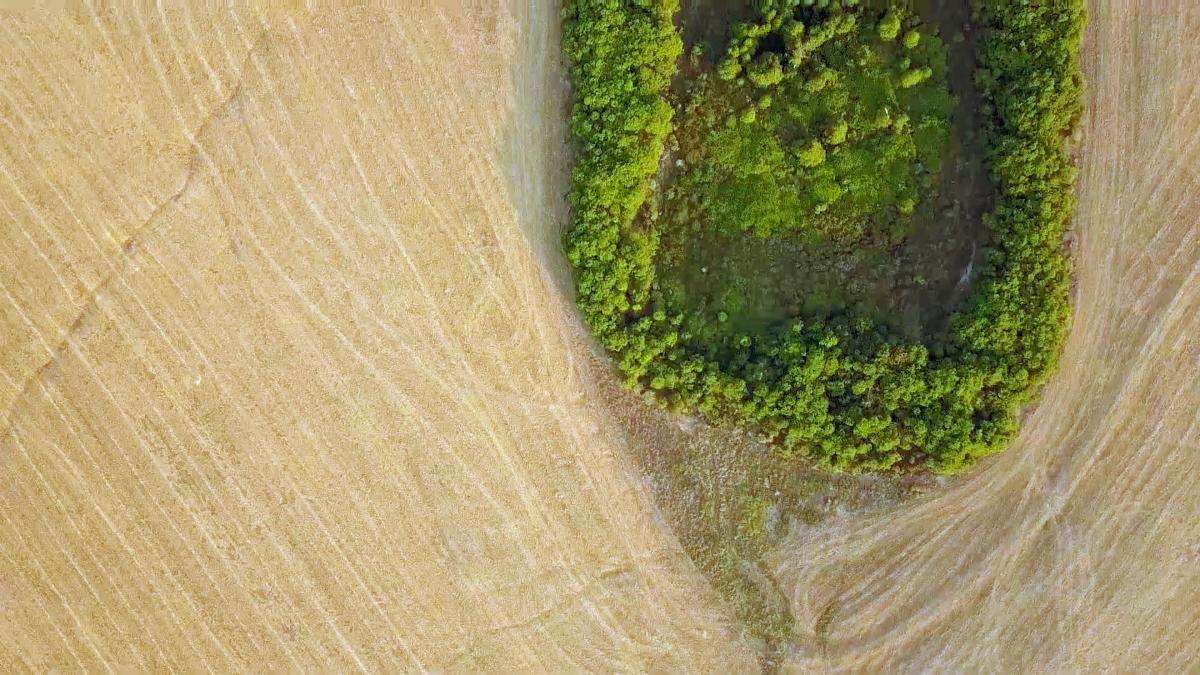
The outcome in the Cerrado is especially relevant because this biome, which occupies a large part of central Brazil, is at the heart of Brazilian agricultural expansion. The conversion of native vegetation into crops and pastures puts pressure on ecosystems that are fundamental to biodiversity and the maintenance of water sources throughout the country.
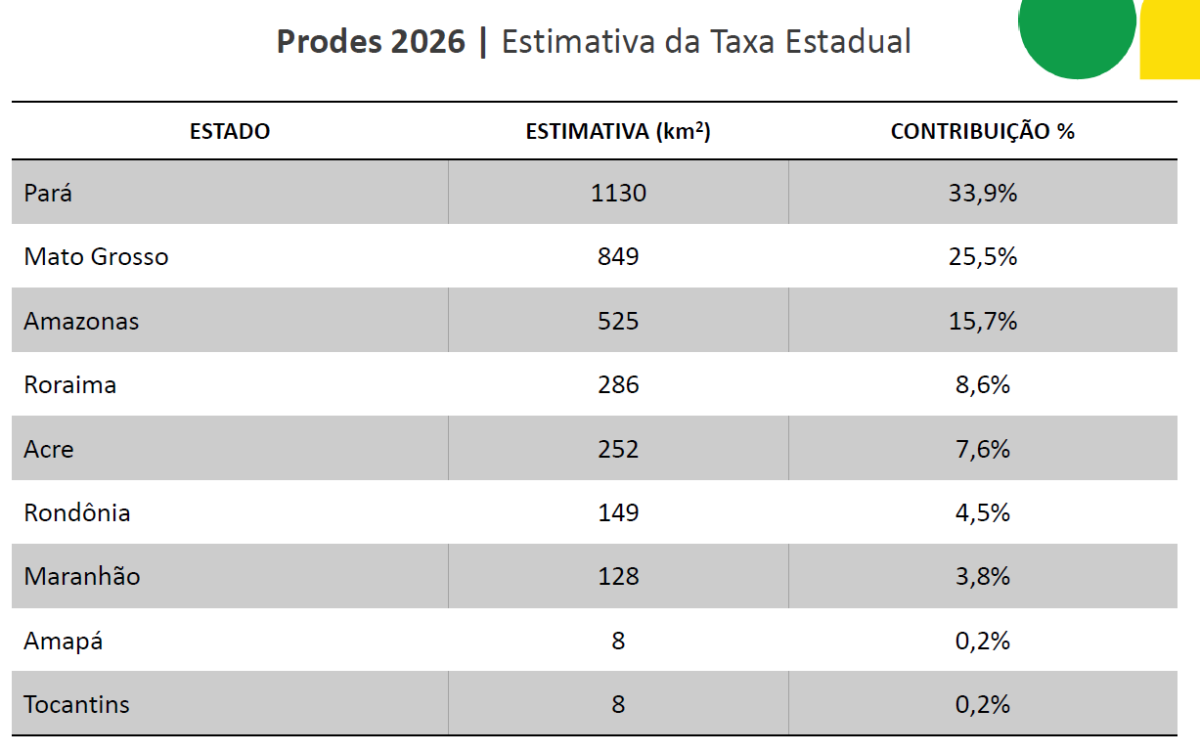
The data was released by the government at the Planalto Palace, in Brasília, this Friday (16). The numbers were produced by the Monitoring of Deforestation in the Brazilian Amazon Forest by Satellite (Prodes), from Inpe, responsible for the official annual deforestation rates. The methodology allows estimating the area of native vegetation totally suppressed (clear-cutting) and monitoring the evolution of the problem over the years. The results are the main parameter for evaluating environmental policies.
“It’s great to see the rates reach this historic level. It proves that all it takes is political will to make this happen,” says Adriana Ramos, executive director of the Socio-Environmental Institute (ISA) . “Brazil already has the strategic knowledge, public policies, and instruments necessary to advance in reducing deforestation and truly fulfill its commitment to zero deforestation,” she adds.
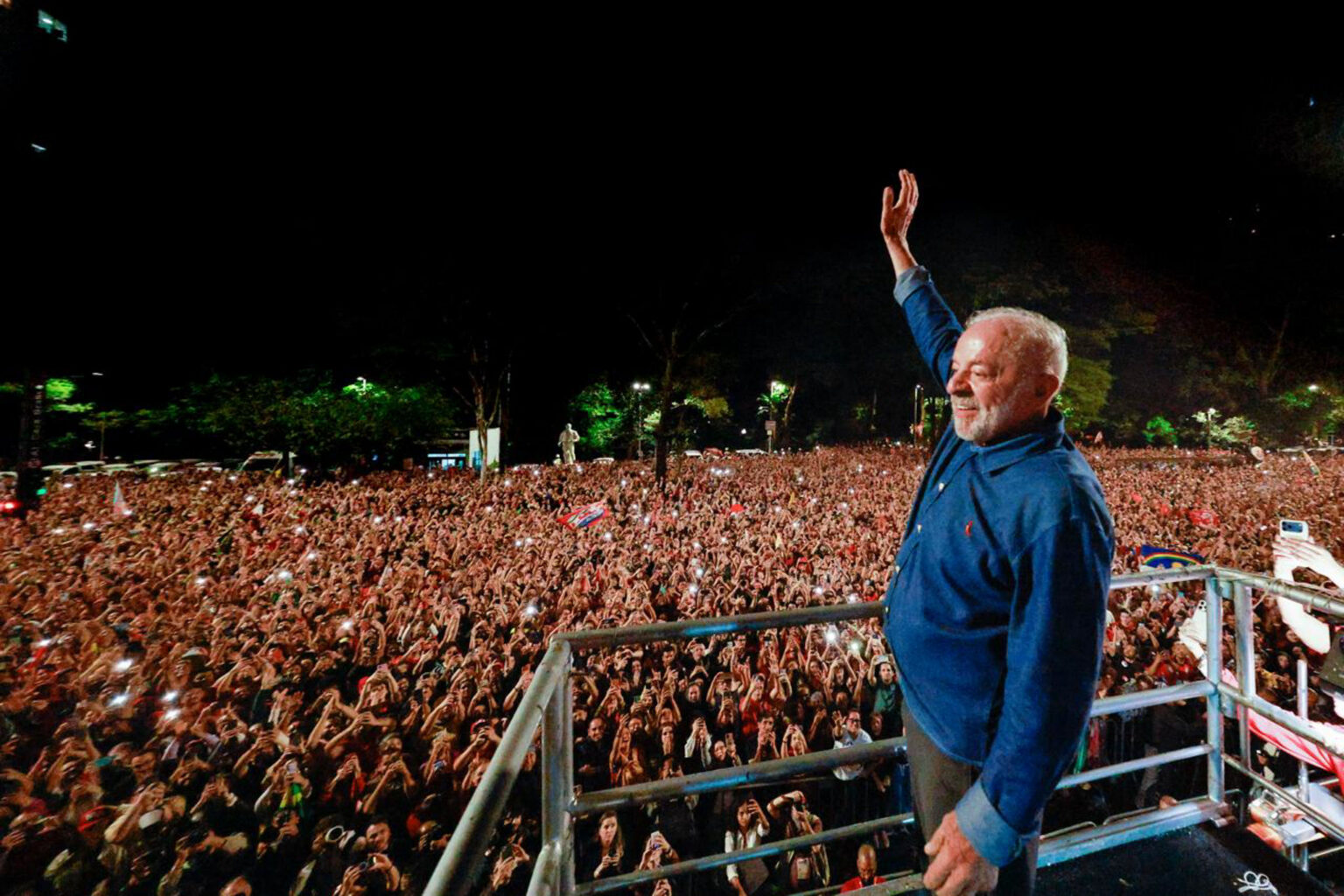
Lula vs. Jair Bolsonaro governments
The recent trajectory of the indices represents a significant inflection point compared to the previous government. Jair Bolsonaro's administration (2019-2022) was marked by the maintenance of high rates of destruction of biomes.
In the Amazon, annual deforestation fell from 10,1 km² in 2019 to 11,5 km² in 2022. Comparing the last year of the Bolsonaro administration to this year, the decrease is 71%. In 2021, forest destruction reached over 13 km², the highest rate in a decade ( see graph at the beginning of the news ).
The figures released now highlight the change recorded since the change of government in 2023. The Bolsonaro administration was openly anti-environmental and anti-indigenous, characterized by a widespread dismantling of the legal and institutional framework for environmental protection and the encouragement of invasions of protected areas. The deforestation figures from the previous government, therefore, are not a coincidence.
The data raises questions about the future of environmental conservation in the midst of an election campaign. An analysis of the government programs of the presidential candidates produced by the Climate Observatory (OC) does not allow us to foresee an optimistic scenario if Senator Flávio Bolsonaro (PL-RJ), son of the former president, is elected.
"Throughout his government program, the candidate states that his father's government will be his benchmark for governance. It is worth remembering that it was precisely during Jair Bolsonaro's presidency that the country suffered the worst environmental and climate administration in its entire history," the document says.
Flávio has already stated his intention to halt the demarcation of Indigenous Lands and attempt to open these territories to large economic ventures. Considering other statements, his positions in Congress, and his government program, it is also possible to foresee actions and proposals to weaken environmental legislation and agencies.
Change of orientation
The shift in direction under Lula's government included the resumption of the Action Plan for Prevention and Control of Deforestation in the Legal Amazon (PPCDAm), launched in 2004. The work of agencies such as the Brazilian Institute of the Environment (Ibama) and the Chico Mendes Institute for Biodiversity Conservation (ICMBio) was also strengthened, despite problems with budget, structure, and personnel.
According to the Planalto Palace, between 2023 and 2026, IBAMA (Brazilian Institute of Environment and Renewable Natural Resources) issued R$ 11,8 billion in fines for crimes against flora and embargoed 18,6 km² of areas with illegal deforestation. Furthermore, since January 2023, 18 federal conservation units have been created in the country and another eight have been expanded, totaling approximately 25 km². During the same period, 20 indigenous lands were officially recognized, totaling 32 km².
“These results don’t fall from the sky,” stated the Extraordinary Secretary for Deforestation Control at the Ministry of the Environment (MMA) during a press conference held at the Planalto Palace. “This is the largest recent contribution from a country to the fight against climate change in the world,” he emphasized.
climate crisis
The results of the fight against deforestation during Lula's administration are even more important considering the worsening climate crisis. The planet is experiencing what is expected to be the largest El Niño in history. The phenomenon of warming waters in the Equatorial Pacific is cyclical, but it has been intensified by climate change, which, in turn, is stimulated by human activity.
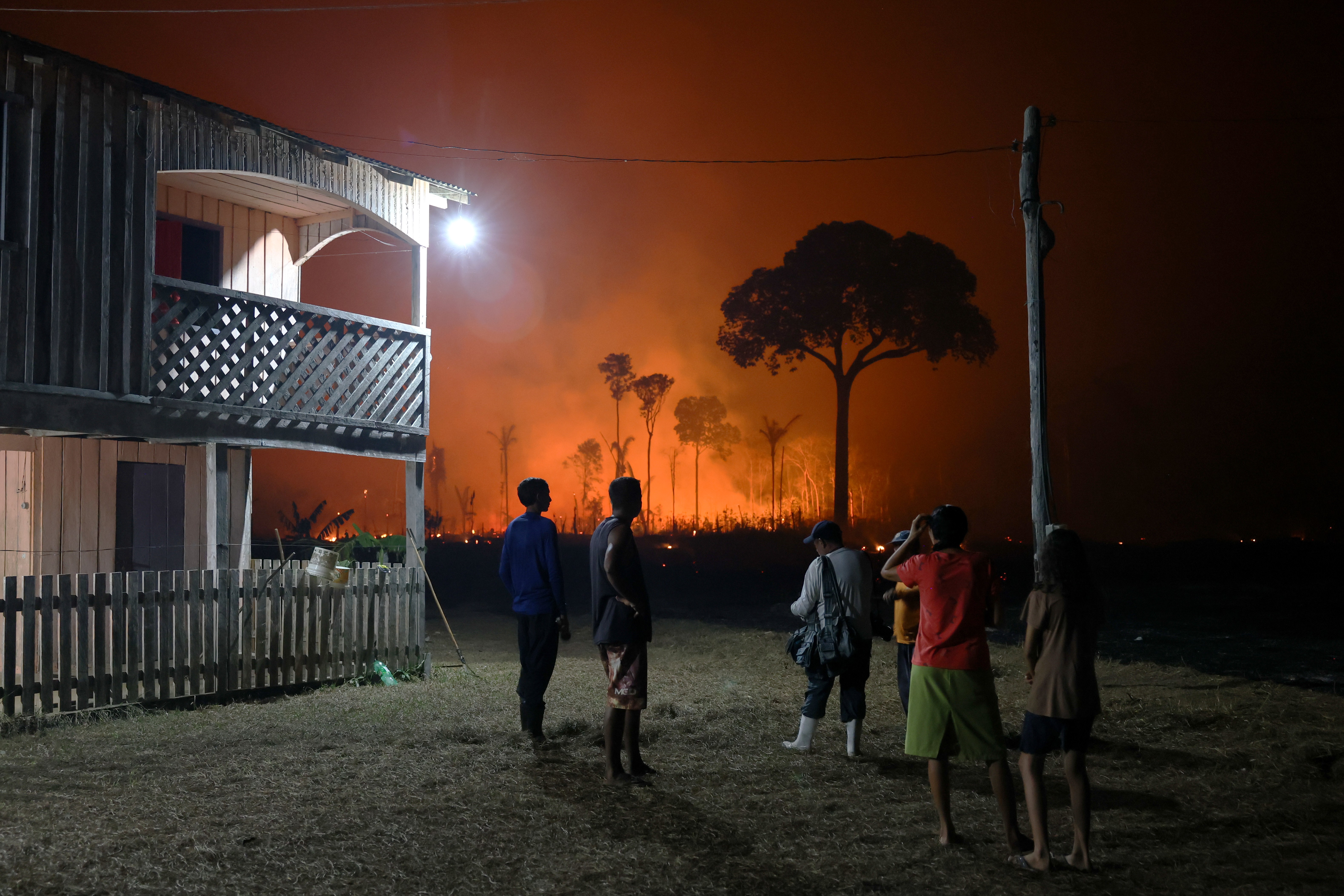
Among its consequences, the spread of drought and wildfires in the Amazon, floods in the central-southern part of the country, and heat waves throughout the national territory are already being observed.
According to the OC , controlling deforestation over the past four years has prevented the emission of 2,328 billion tons of greenhouse gases, responsible for global warming. In Brazil, deforestation accounts for about half of these emissions.
“The numbers released today are a historic achievement. They position Brazil as a protagonist in the forest protection agenda and show the world that, with political will, it is possible to curb chainsaws and greenhouse gas emissions,” reinforced Márcio Astrini, executive secretary of the OC.
In a statement , the OC reinforced that the decrease in deforestation observed during Lula's third term was accompanied by a growth of more than 17% in the GDP of agriculture between the last year of Jair Bolsonaro's administration and the forecast for this year, of R$ 3,13 trillion. In other words, the numbers prove that agribusiness does not need the destruction of the forest to grow.


 Loading